Factory fixtures often need adjustments as manufacturers introduce new products, change part dimensions, or update assembly procedures. Permanently mounted components can make these changes difficult, especially when workers need to drill additional holes or replace entire sections. Adjustable fixtures built with aluminum framing offer a practical alternative, allowing production teams to modify equipment setups without extensive rebuilding.
Continuous Mounting Slots Allow Easy Repositioning
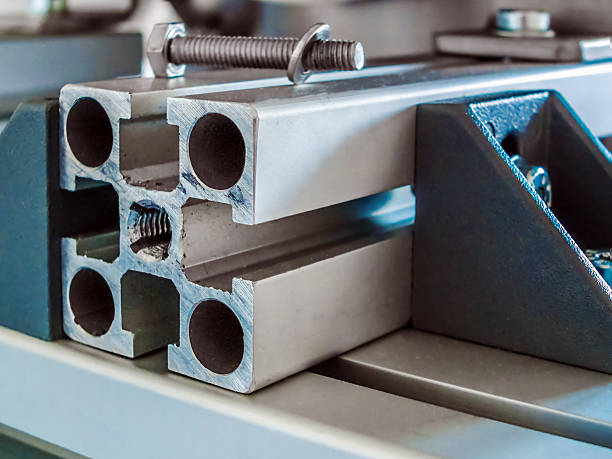
Mounting flexibility is one reason manufacturers use extruded aluminum framing for adjustable fixtures. Its slotted profiles allow technicians to attach clamps, brackets, sensors, and tool holders at different positions without drilling permanent mounting holes. Workers can loosen compatible fasteners, move components along the channel, and secure them in their new positions. This arrangement works well for fixtures that handle parts of different lengths, widths, or shapes. However, mounting hardware must match the profile and provide enough clamping force to prevent movement during operation.
Why Repeatable Positioning Matters for Adjustable Fixtures
Moving a fixture component is only useful if workers can position it accurately each time. Small placement errors can affect drilling accuracy, assembly alignment, and inspection measurements. Reference stops, locating pins, and marked adjustment positions allow operators to restore previous settings without measuring everything from scratch. An aluminum frame kit can accommodate these accessories through compatible mounting plates and brackets, making it easier to maintain consistent results across different production runs.
Securing those positions requires attention to how the fixture operates. Heavy clamping forces or repeated vibration can cause poorly fastened components to move, even if they initially appear tight. Mechanical stops and properly rated fasteners provide more reliable positioning than friction alone. For workstations requiring several adjustments per shift, dedicated sliding mechanisms or quick-release fixtures may also reduce setup time and wear on structural connections.
Profile Sizes Can Match Different Fixture Loads
Fixture strength depends on the forces applied during production, not just the weight of the parts being held. Pneumatic clamps, pressing tools, and moving equipment can introduce loads that cause unsupported sections to bend. Engineers should compare profile dimensions, stiffness, and connection ratings before selecting suitable aluminum framing material. Smaller profiles may work for inspection stands, while heavier assembly fixtures may need deeper sections or additional crossmembers. Excessive frame movement can affect part alignment, so designers must also consider allowable deflection and repeated operating forces.
Modular Construction Makes Fixture Changes Less Complicated
Product revisions sometimes require more than moving a bracket. Manufacturers may need wider fixture bases, additional supports, or different mounting arrangements to accommodate updated components. A modular aluminum framing system allows individual sections to be replaced or extended using compatible connectors. Existing profiles can remain in service if they meet the revised structural requirements, reducing the need to manufacture an entirely new fixture.
Maintenance access deserves equal attention during these modifications. Fasteners hidden behind equipment panels can make simple adjustments unnecessarily difficult. Designers should allow enough space for tools, removable components, and routine inspections. Standardizing profile sizes and connection hardware across production stations also makes replacement parts easier to manage. Technicians can complete changes faster when compatible materials are readily available.
Lightweight Profiles Make Fixtures Easier to Handle
Fixtures used for different products may need to be removed, stored, or transferred between workstations. Aluminum profiles are lighter than comparable steel sections, making smaller assemblies easier to handle during changeovers. Their natural corrosion resistance is another advantage in many manufacturing environments, although certain chemicals can still damage aluminum surfaces. Weight savings must be balanced against structural demands, particularly where fixtures support heavy equipment or experience repeated impacts. Engineers should verify that the selected profiles remain sufficiently rigid throughout operation.
Adjustable Fixtures Can Support More Than One Product
Production lines handling multiple product variations benefit from fixtures that accommodate different dimensions without extensive modifications. Movable stops, replaceable mounting plates, and adjustable clamps allow technicians to prepare one structure for several applications. The continuous channels of T-slot extrusion make these changes possible while reducing the need for permanent mounting holes. Documented setup positions further simplify repeat production runs. Before switching products, operators should verify that the revised fixture provides adequate support and holds each workpiece securely.
You can trust MiniTec Solutions for modular aluminum profiles, compatible connectors, and custom framing components suited to industrial fixtures and assembly equipment. Its available materials and design assistance give manufacturers options for developing adjustable structures that accommodate changing product sizes and production requirements. Businesses can shorten equipment changeovers, reuse existing fixture components, and reduce the expense of building separate assemblies for every product variation.